



Faculty Biographies
March 25–26, 2026, Virtual Meeting
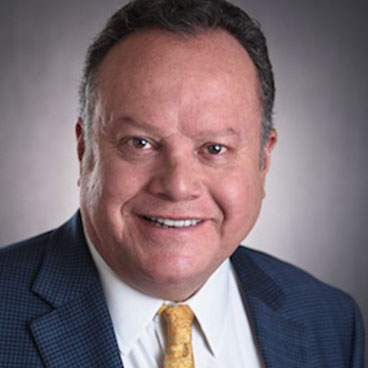
Rafael Fonseca, MD
Mayo Clinic, Arizona
Rafael Fonseca, MD, is the Getz Family Professor of Cancer, professor of medicine, interim executive director of the Mayo Clinic Comprehensive Cancer Center, director for innovation and transformational relationships, and a consultant in the Division of Hematology/Oncology at the Mayo Clinic in Arizona. He earned his MD at Universidad Anahuac, Mexico. He completed a residency in internal medicine at the University of Miami, FL, and a fellowship in hematology and medical oncology at Mayo Graduate School of Medicine, Rochester, MN. He was named a clinical investigator for the Damon Runyon Cancer Research Fund. He is a visiting healthcare fellow at the Goldwater Institute.
Dr Fonseca’s practice has focused on the diagnosis and treatment of plasma cell disorders and leading the multiple myeloma team in its effort to develop a better understanding of the disease and its impact on patients. In his laboratory, Dr Fonseca has led his team of researchers in concentrating on the genetic nature of the clonal cells of plasma cell disorders, myeloma bone disease, prognostic markers, and development of new therapies for the disease.
Throughout his training and career, Dr Fonseca has received numerous awards and honors, including the Damon Runyon-Walter Winchell Clinical Investigator Award, and the International Waldenström Macroglobulinemia Research Award. Most notably, he is a Mayo Clinic Distinguished Investigator, the highest academic distinction given to investigators at his institution. Dr Fonseca holds memberships and serves in positions for organizations such as the American Society of Clinical Oncology, American Society of Hematology, American Association for Cancer Research, and the International Myeloma Society. His research has been funded by the National Cancer Institute (R01, P01, SPORE), the Leukemia & Lymphoma Society, the Multiple Myeloma Research Fund, and the Damon Runyon Cancer Research Fund. Dr Fonseca serves as reviewer and in editorial capacities for medical publications including Blood, Lancet, Nature Medicine, Cancer Cell, Leukemia, and the New England Journal of Medicine, among others. He has given many national and international presentations as a visiting professor, and has authored numerous articles (over 300), book chapters, editorials, abstracts, and letters.
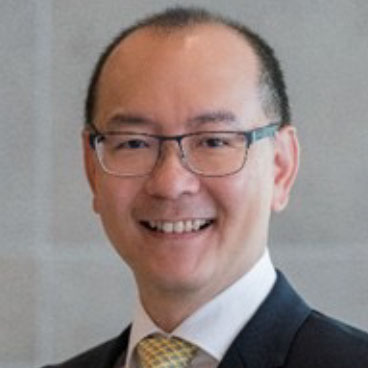
Wee Joo Chng, MB ChB, PhD, FRCP (UK), FRCPath (UK), FAMS
Prof Wee Joo Chng is the vice president of biomedical sciences research at the National University of Singapore and a senior principal investigator at the Cancer Science Institute of Singapore. He is also a professor of medical oncology at the Yong Loo Lin School of Medicine, the group chief scientist at the National University Health System, and the inaugural executive director of the Singapore Translational Cancer Consortium. Prof Chng obtained his medical degree from the University of Leeds in the United Kingdom and completed his internal medicine residency and hematology fellowship in the United Kingdom and Singapore, respectively.
Prof Chng has served as a senior consultant at the National University Cancer Institute, Singapore, for over 2 decades. He is a distinguished researcher in the fields of genomics, therapeutics, and hematologic malignancies, with extensive experience in clinical practice, administration, and leadership. He has produced highly translational research that has improved patient outcomes and allowed for therapy personalization, such as the use of global genomic techniques to better identify drug resistance and enhance disease prognosis in hematologic malignancies. Prof Chng has received numerous national and international awards for his groundbreaking work, including the National Medical Research Council’s National Outstanding Clinician Scientist Award in 2016. In 2020, he was the first person in Asia to receive the International Myeloma Foundation’s Brian G.M. Durie Outstanding Achievement Award.
Prof Chng is currently the chair of the Asian Myeloma Network and a member of various leading national and international professional committees, including the American Society of Hematology and the International Myeloma Working Group, and the former president of the Singapore Society of Haematology.
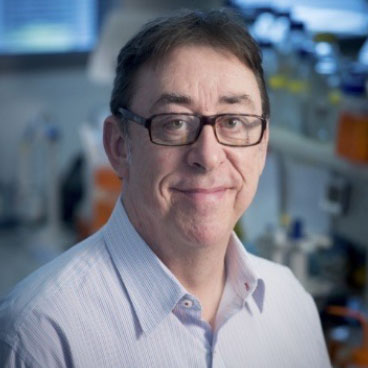
Andrew Spencer, MBBS, DM, FRACP, FRCPA
Prof Andrew Spencer is head of the Malignant Haematology, Transplantation, and Cellular Therapy Service and the Myeloma Research Group at The Alfred Hospital in Melbourne, Australia. He is a professor of hematology at Monash University, also in Melbourne. Prof Spencer received his medical training in Australia at the Princess Alexandra Hospital in Brisbane and the Royal Prince Alfred Hospital in Sydney. He completed a fellowship at The Royal Postgraduate Medical School in London in the United Kingdom and obtained a medical degree from the University of London.
In 1999, Prof Spencer established an independent translational research program and a first-in-human and early-phase hematology clinical research unit, currently with over 140 open trials, at The Alfred Hospital. In 2016, he established the Australasian Myeloma Research Consortium. Since 2021, he has been an invited speaker at 50 international meetings on genomics, therapeutics, and disease monitoring in multiple myeloma.
Prof Spencer serves on the scientific advisory boards of the International Myeloma Foundation and the International Myeloma Working Group. He also established and chairs the Australian and New Zealand Myeloma and Related Diseases Registry (MRDR), the Asia-Pacific MRDR, and the associated M1000 liquid biopsy biobank. He is on the board of the European Myeloma Network and the International Advisory Board of the Asian Myeloma Network. Prof Spencer has more than 340 peer-reviewed publications with over 34,000 citations.

Hermann Einsele, MD, FRCP
Universitätsklinikum Würzburg; Germany
Prof Hermann Einsele is full professor of internal medicine and has been director of the Department of Internal Medicine II at the University Hospital Würzburg, Germany, since 2004. Following his medical training at the Universities of Tübingen, Manchester, and London, he became a research fellow in the Department of Haematology, Oncology, Rheumatology, and Immunology at the University of Tübingen, Germany. Prof Einsele was board certified in internal medicine in 1991 and in hematology and oncology in 1996. In 1999, he was promoted as an associate professor. He was visiting professor at City of Hope, Duarte, CA, and the Fred Hutchinson Cancer Research Center, Seattle, WA. From 2011–2015 and since 2022, he has been vice dean of the Faculty of Medicine of the University of Würzburg, and from 2015–2021, vice president of the University of Würzburg.
Prof Einsele is an expert in the field of multiple myeloma, with a focus on chimeric antigen T cells, bispecific antibodies, adoptive immunotherapy, and stem cell transplantation. In 2003, he received the van Bekkum Award, the highest annual European award for research in the field of stem cell transplantation. In 2011, he was elected as an honorary fellow of the Royal College of Pathologists, and in 2012, as the Nobel Lecturer for Stem Cell Biology and Transplantation at the Nobel Forum Karolinska Institute. Since 2014, he has been a member of the Academy of Sciences and Literature, Mainz, and has been recognized as an Institute for Scientific Information Highly Cited Researcher in the category of Clinical Medicine since 2017. In 2022, Prof Einsele received the Erasmus Hematology Award from the Erasmus University Medical Center, Rotterdam, the Netherlands, and the Bavarian Constitutional Medal. In 2023, he received the Emil von Behring Prize from the German Society for Transfusion Medicine and Immunohematology (DGTI). Since 2018, Prof Einsele has been chair of the scientific working group on immunotherapy for hematologic malignancies of the European Hematology Association, and he has been a member of the Academia Europaea since November 2023. In 2024, he was awarded the Ken Anderson Basic and Translational Research Award from the International Myeloma Society, and in 2025, the title of Doctor Honoris Causa of the “Iuliu Hațieganu” University of Medicine and Pharmacy, Cluj-Napoca, Romania.

María-Victoria Mateos, MD, PhD
University of Salamanca; Spain
Dr María-Victoria Mateos is a professor of medicine and head of the Haematology Department’s Myeloma and Clinical Trials Unit at the University of Salamanca, Spain. She received her medical degree from the University of Valladolid in Spain, and she completed a residency at the University Hospital of Salamanca.
Dr Mateos is president of the Spanish Myeloma Group (GEM), with direct involvement in the design and development of clinical trials. She has coordinated many clinical trials, especially in the setting of transplant-ineligible and smoldering myeloma, and these studies have profoundly influenced current options for the treatment of these patient populations.
Dr Mateos has published over 500 papers in international journals, with an H index of 102. She is a member of the International Myeloma Working Group, the International Myeloma Society (IMS), the European Hematology Association (EHA), and the American Society of Hematology. Dr Mateos was a councilor on the EHA board from 2015 to 2019 and is now a member of the IMS executive board. She received the Brian G.M. Durie Outstanding Achievement Award in 2019, the Bart Barlogie Clinical Investigator Award in 2022, the Robert A. Kyle Lifetime Achievement Award in 2023, and the Waldenström Lifetime Achievement Award in 2025. Dr Mateos has been the president of the National Society of Hematology since 2022, appointed for a 4-year mandate.

Juan Du, MD, PhD
Dr Juan Du is a professor, chief physician, and director of the Department of Hematology at Renji Hospital in Shanghai, China. She received her medical degree from the Shanghai Jiao Tong University School of Medicine.
Dr Du is a member of the International Myeloma Working Group (IMWG), the IMWG Immune Therapy Steering Committee, the Asia Myeloma Network, and the National Committee of Hematology branch of the Chinese Medical Association.
Dr Du has published over 100 research articles in peer-reviewed journals such as JAMA Oncology, Blood, The Lancet Haematology, and Blood Cancer Journal.
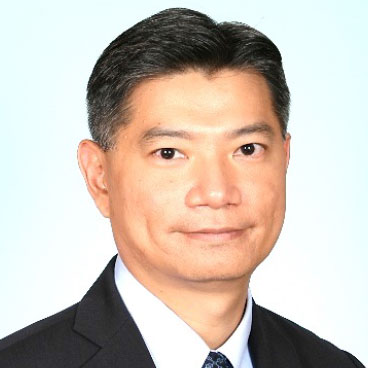
James Chim, MBChB, MD, PhD, MRCP, FRCP, FACP, FRCPath, FFSc, FAcadTM, FHKCP, FHKAM
University of Hong Kong; China
Dr James Chim has worked at the Queen Mary Hospital in Hong Kong, China, for 30 years. Previously, he was a hematology and oncology professor at the Chinese University of Hong Kong’s S.H. Ho College and is now the honorary clinical professor of the university’s Department of Medicine. He is also the honorary clinical professor of the Department of Medicine and Therapeutics at the Chinese University of Hong Kong and the honorary consultant at the Hong Kong Sanatorium & Hospital. Dr Chim received his medical degree from the Chinese University of Hong Kong and completed postgraduate medical training at the Royal Free Hospital in London, UK, and the University of Chicago, IL, USA.
Dr Chim is a clinician scientist interested in the study of DNA methylation of suppressor genes and noncoding RNAs (micro-RNAs and long noncoding RNAs) in blood cancers. His research on epigenetic alterations in acute leukemia was awarded the prestigious State Scientific and Technological Advancement Award in China in 2009. In recognition of his work in DNA methylation in blood cancer, he was awarded an honorary fellowship from the UK’s Royal College of Pathologists. Dr Chim established the Hong Kong Society of Myeloma and is the founding and current chairman. He has formulated treatment protocols and organized clinical trials for patients with myeloma in Hong Kong and spearheaded the establishment of the myeloma patient group Hong Kong Myeloma Care & Share. The number of patient members was over 300 as of 2020.
Dr Chim received the Asian Myeloma Network (AMN) Distinguished Achievement Award from the International Myeloma Foundation in 2025 and has been awarded a fellowship from the Royal College of Physicians in the UK. He was also a founding fellow of the Faculty of Science of the Royal College of Pathologists of Australasia and the Academy of Translational Medicine Professionals of the European Society for Translational Medicine. Dr Chim is a member of the International Myeloma Working Group, an executive council member of the AMN, invited founding member of the International Academy for Clinical Hematology, and a research advisor for the Nan Yang Academy of Sciences of Singapore.
Dr Chim has authored over 270 publications in international peer-reviewed journals, spanning scientific, translational, and clinical research, and has an H index of 50. Dr Chim also sits on the editorial board of many journals, including Clinical Epigenetics, Blood Cancer Journal, Bone Marrow Transplantation, Scientific Reports, Blood Reviews, and Journal of Translational Medicine. Dr Chim is currently the honorary/visiting professor of many universities in China, including Peking University People’s Hospital in Beijing and the Chinese PLA Postgraduate Medical School and PLA General Hospital of Beijing, as well as Sichuan University, Soochow University in Suzhou, and Tongji Medical College in Wuhan.